
Crimzle › Previous cases › Case 021
Forgery Behind the Shutter
Case 021 · 22 September 2026 · Medium
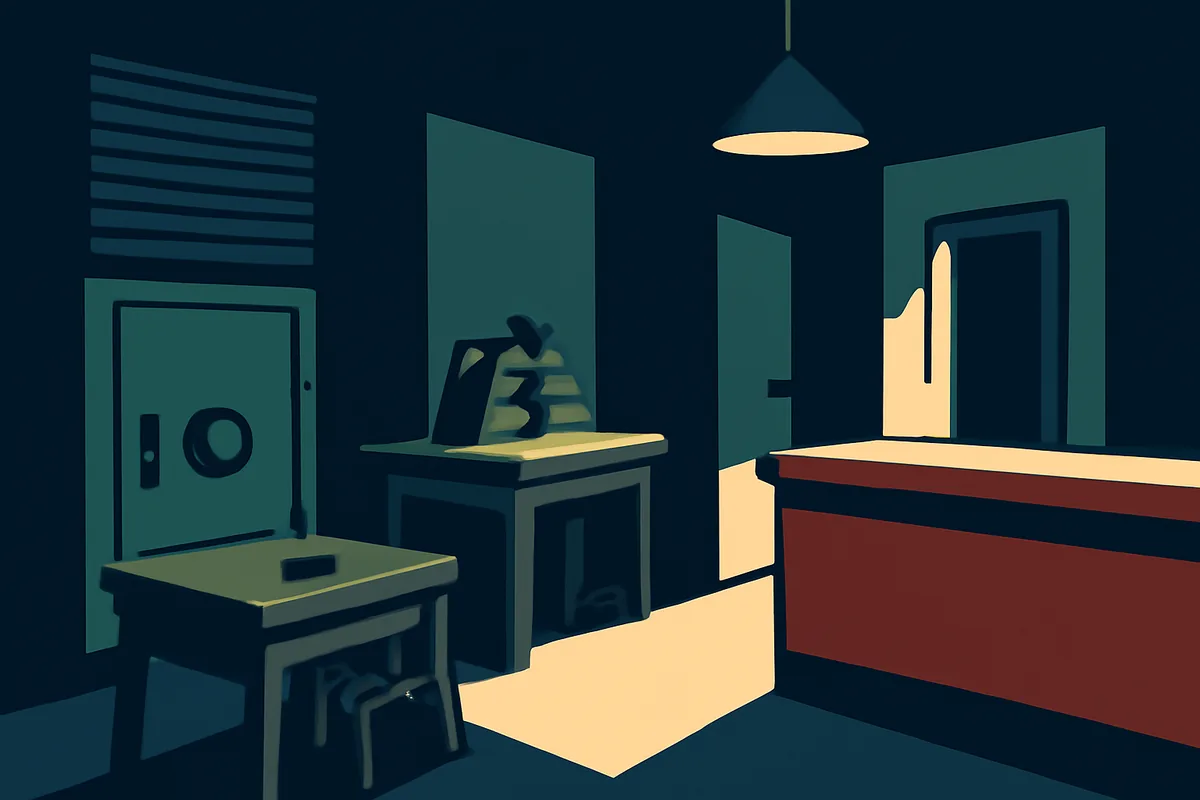
By the time the metal shutter was rolled up at dawn, the jeweller’s workshop was still sealed from the inside, dust unbroken on the floor and locks intact. Yet the most valuable item in the safe was no gem, but paper: the original deed that decided who would control the Stanhope estate. Overnight, someone had swapped it for a near-perfect forgery that quietly rerouted the inheritance. The ink, the watermark and even the notary seal had been imitated with frightening skill. Only four people had stayed inside the workshop after closing, each insisting they had never gone near the safe or the document drawer.
Suspects
-
Edwina Stanhope
heiress and co-owner
Edwina grew up expecting to inherit the Stanhope estate and recently invested heavily in the family jewellery business. The forgery, if valid, would cut her share dramatically and leave her leverage in doubt.
-
Ernest Winslow
estate solicitor
Ernest handled every filing for the Stanhope estate and stored the deed in the workshop safe after a valuation session. The forged document quietly redirects controlling interest toward a legal structure he manages.
-
Gideon Corliss
master jeweller
Gideon owns the workshop and had agreed to hold the deed in his safe until a dispute between the heirs was resolved. A forged deed could free him from certain guarantees he had signed with the family.
-
Lavinia Underhill
independent appraiser
Lavinia was hired to give an impartial valuation of both the jewellery stock and the Stanhope estate as collateral. Any change in who held the deed’s rights would also change the contracts she had pending.
Possible tools
-
the steel letter-opener
A narrow steel letter-opener, heavy in the hand, used in the workshop office for opening registered envelopes and lifting wax seals.
-
the brass candlestick
An ornate brass candlestick from the display shelves, stained with old wax and sturdy enough to prop open a window or press a stack of papers flat.
-
the iron paperweight
A solid iron paperweight shaped like a small ingot, used to keep appraisal forms from curling under the drafts from the ventilation.
-
the glass decanter
A cut-glass decanter normally kept in the back cupboard, half-full of water for cooling polishing tools between runs.
Places
-
the safe alcove
A narrow alcove recessed into the wall where the workshop safe and the document drawer sit behind reinforced steel.
-
the design desk
A broad drafting desk strewn with tracing paper, ink pens and magnifying loupes for sketching new settings and signing documents.
-
the polishing bench
A low bench with spinning wheels and trays of abrasive pastes where stones and metal surfaces are polished to a shine.
-
the front counter
The public-facing counter with glass display cases, where customers are greeted and smaller pieces are examined under bright lights.
Evidence & statements
- Edwina Stanhope was the one carrying the brass candlestick.
- Gideon Corliss was the one carrying the iron paperweight.
- If whoever was at the front counter was carrying the brass candlestick, then whoever carried the glass decanter was the tallest person in the workshop.
- Edwina Stanhope spent that time at the front counter.
- Exactly one of these is true, never both: the object with whoever stayed at the safe alcove was the heaviest of all the objects, or Lavinia Underhill was the one at the design desk.
- The iron paperweight never went to the polishing bench.
- A smear of specialised transfer ink was found soaked into the blotter at the design desk, matching the ink used on the forged deed: the forger spent those minutes at the design desk.